- Thomas Schneidawind
Rising food prices
The news could be better these days: The Iran conflict is driving up energy prices - and will continue to fuel food inflation.
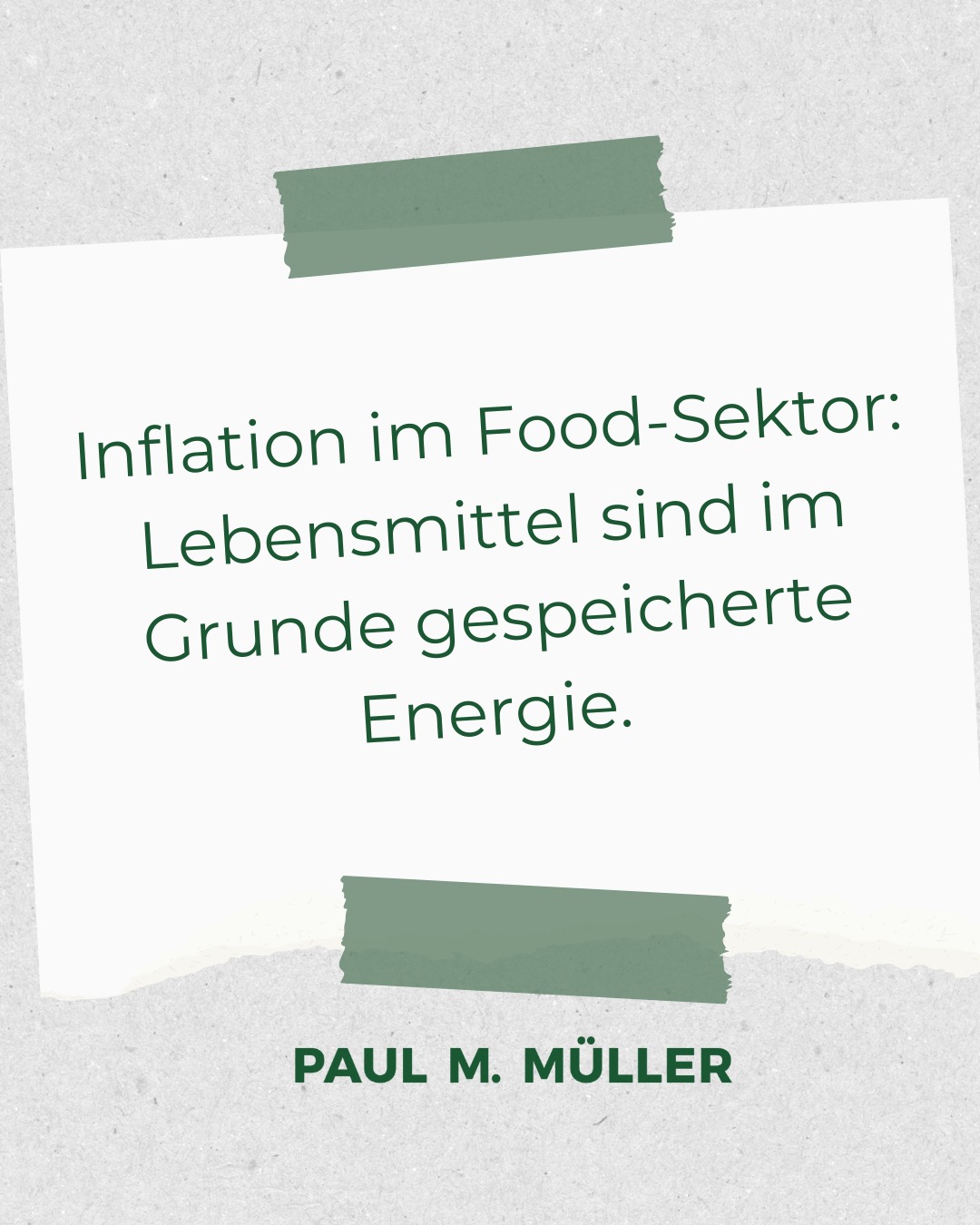
The podcast points this out Business news from BR24, based on a study by the Institute for Macroeconomics and Business Cycle Research (IMK). The key point: food is basically stored energy. This is because there is energy in every step along the entire chain:
Agriculture:
Fertilizer is produced from natural gas, which is energy-intensive, and machines run on diesel. This makes the harvest itself significantly more expensive.
Processing:
Whether baking, pasteurizing or drying - the food industry requires large quantities of gas for process heat and electricity for systems.
Logistics & cooling:
Transportation, storage and cold chains are permanently energy-dependent - from the producer to the retailer.
Packaging:
Many materials such as plastic, glass or metal are energy-intensive to produce - and costs are rising here too.
What this means is that the effects are delayed - but they do come. While fuel prices react immediately, rising gas prices only have an impact on food after months. At the same time, fixed costs increase along the entire value chain - often gradually and initially barely visible to end consumers. There is no simple solution. But what is becoming clear: The industry is responding - with more efficient processes, more targeted purchasing and clearer structures.
This is exactly where we come in: We support our customers in strategically designing product ranges, simplifying processes and remaining economically stable - even in a challenging market environment. Rising food prices are not a short-term phenomenon, but the result of structural changes. If you want to understand the market, you have to look at energy, supply chains and processes together.
We will be happy to help you.
Tell a friend:
Our expert

Thomas Schneidawind
Managing director,
Contact person for
Beans, capers, peppers, hot peppers and tomato products