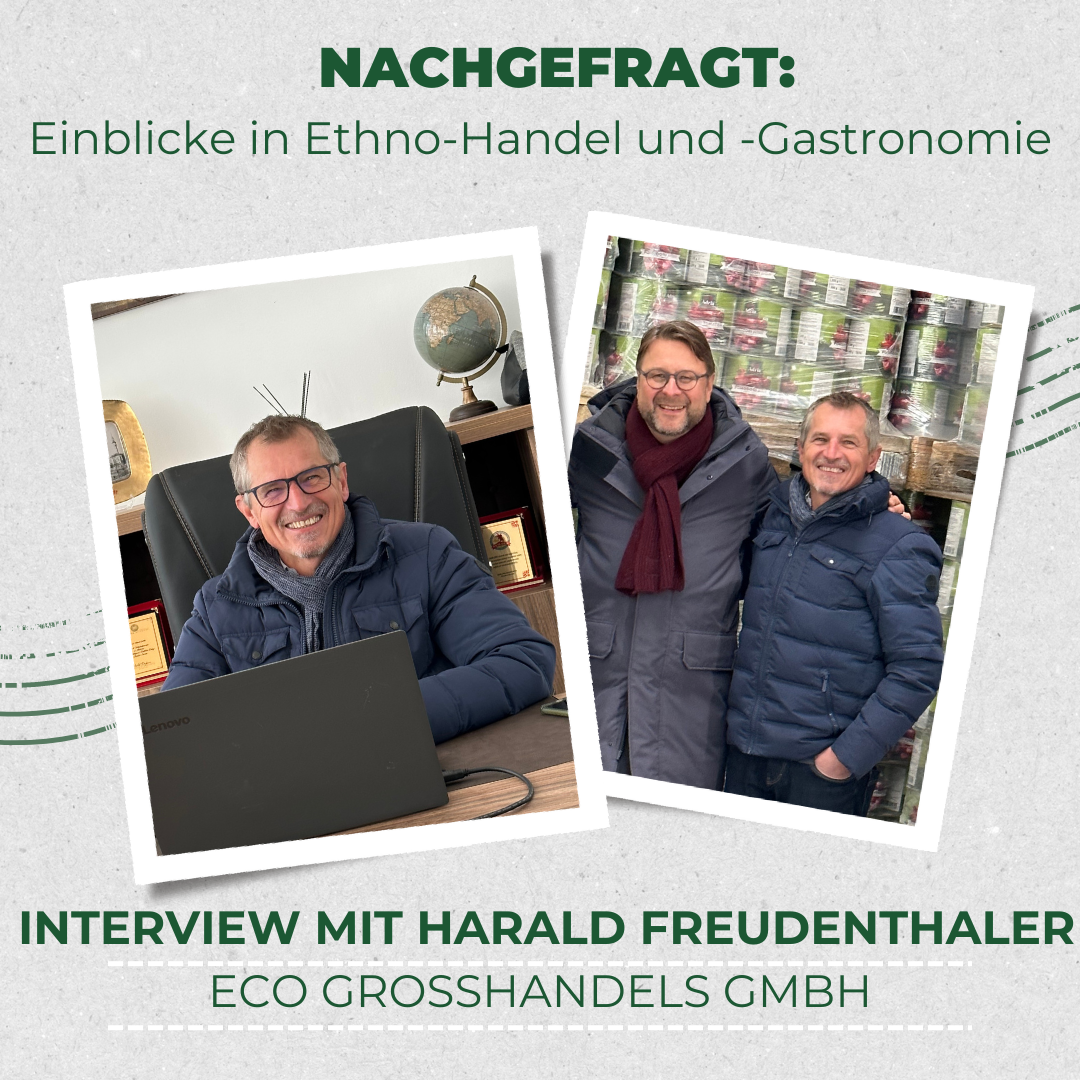
PMM: Mr. Freudenthaler, why is the ADRIA brand so important in Austria?
We started distributing the ADRIA brand in Austria with Paul M. around 30 years ago. You have to know this: Here in Austria, the boom in pizzerias began in the late 1980s and early 1990s. Back then, the effort involved was very high and the Italian gastronomy industry was slowly rethinking its approach because it wanted to reduce the amount of work involved. At the time, the products involved a lot of work and manual labor, such as grating cheese or slicing salami or pepperoni. The problem was that these convenience products were not available on the market. Together with Paul M. Müller, he started an attempt to import mild and hot sliced pepperoni in jars. Thomas Schneidawind and his Turkish producer actually managed to realize their wish and deliver the first containers of sliced chilli peppers to us. Until then, chilli peppers were only available whole - and we were the first in Austria to sell sliced chilli peppers. It was a huge success at the time. 90 percent of our customers switched to sliced goods as a result. To this day, ADRIA pepperoni mild and spicy cut very well known and incredibly popular throughout Austria - still one of our best-selling ADRIA items. This story is just one example of why the ADRIA brand is so highly regarded in Austria.
PMM: What other examples are there?
When the boom in pizzerias began, there were no wholesalers specializing in this market. This has, of course, changed completely in the meantime with ethnic wholesalers - not just in Austria, but throughout Europe. Back then, however, pizzerias bought their products from different distributors at different prices and in different qualities. Nobody was happy with this situation. When we started to sell and position the ADRIA brand with all the products for the Italian food service industry in Austria, the pizzerias gradually realized that they could rely 100 percent on the quality and price. This attitude and the positive perception of the ADRIA brand have grown steadily in Austria since then and will continue to do so in the future.
PMM: What distinguishes the Austrian market from the German market?
In ethnic gastronomy - i.e. typical restaurants with operators from the same cultural groups - "real Italians" are much less common in Austria. In Austria in the 1970s and 1980s, no guest workers came from Italy, as was the case in Germany. Instead, numerous people came from the former Yugoslavia, the Middle East and Turkey, 90 percent of whom still make up the ethnic business today. The market for pizzerias and ethnic gastronomy developed mainly from this population group. The few "real Italians" who run an Italian restaurant in Austria purchase most of their goods directly from Italian wholesalers - simply because of their proximity to the Italian border. Another striking difference to the German market is the lack of large franchise chains operating nationally.
PMM: How does a brand become a brand?
By having the confidence to list an unknown brand - that's how it was when we sold ADRIA products for the first time. No one knew the brand until then, but someone simply has to dare to do it. It is also very, very important for a brand, especially in our industry, that the product has a very high recognition factor when it comes to visual presentation. Imagine this: Someone works in an ethnic gastronomy business, is hard-working and at some point starts their own business. Which products does he buy? The ones he knows. The visual presentation of the products is very important here. Someone who knows and appreciates a product also wants to buy it again. A brand also becomes a good brand through the constant availability of goods. Nobody benefits from a great brand if it is not available. What is also important, and here I come back to the story I told at the beginning, is that a brand becomes a brand when the customer is happy with it. When they are proud of it and say: I only work with this brand.
PMM: How is your company planning logistics in Austria?
In and around Vienna and the neighboring provinces with own logistics. Everything concerning the ADRIA brand or smaller, medium-sized wholesalers with external logistics.
PMM: What are the major challenges in the ethnic market?
In my opinion, it is very important to understand the mentality and culture of our customers in the ethnic market. If you don't understand the people, it simply won't work because the ethnic customer reads and listens between the lines. Business talks are not just about business. If you manage to cultivate this special culture of conversation, you can not only build good business relationships, but also long-term friendships. Another point is the ordering system in this customer group. We are all trying to get online orders, have a great IT system and set up online stores. We also receive online orders, but this is very limited. Most orders from Ethno customers are processed over the phone for the reasons mentioned above: We still talk to each other.
PMM: What does that entail?
As a retailer, you also have to take the necessary time for these telephone conversations. It's also about a lot of interpersonal issues and asking questions like: How is the family, what are the children doing? Conversely, customers have experienced how my son was born - and still ask how he is doing. Today he is already 32 years old.
PMM: What are the top sellers of the ADRIA brand?
Tuna, corn and peppers. Tuna is the measure of all things for us. It is used for most dishes, such as tuna salads or tuna spread. Between 80 and 90 percent of the tuna I buy and sell goes straight onto the pizza. It's the same with corn. And with pepperoni anyway.
PMM: How important are strong partnerships like the one with Paul M. Müller for ECO Gastronomiebedarf?
Enormously important. I know that we cannot be successful in the long term without a strong partnership. A strong partnership is characterized by the fact that we believe in each other and work constantly to continue to be successful together. Our focus is not on the classic customer-supplier relationship, but on a customer-supplier relationship based on partnership. Thanks to many years of working together, I naturally know the entire team very well - I have great and competent contacts for every area and all my concerns. Even if something doesn't run smoothly, we stick together.
PMM: Thank you for those words, Mr. Freudenthaler. Would you like to add anything else?
But with pleasure! I would like to express my sincere thanks to all employees in the departments for their partnership and trusting cooperation over the decades.
About the person - Harald Freudenthaler
Harald Freudenthaler started out as a delivery driver in a four-man business in the early 1990s and later switched to field service. After holding various professional positions, he joined Gastro Profi in 2011, where he was a founding member, managing director and later an authorized signatory. He has been working for ECO Gastrohandels GmbH in Vienna (Austria) since 2022 and is in charge of purchasing and sales for ADRIA products.
 You can find out more about ECO Gastrohandels GmbH on our Partner site.